
The Bluegrass ice storm of 2003
On February 15 and 16, 2003, rain turned to freezing rain over central Kentucky. The National Weather Service says ice accumulations approached an inch on exposed branches and sidewalks in Lexington. The Midwestern Regional Climate Center described the impacts in the Lexington area as devastating, with extensive tree damage and 115,000 Kentucky Utilities customers without power. A University of Kentucky forestry expert described more than 1.5 inches of ice on exposed twigs and branches.
January 2009
Less than six years later, the January 26 to 28, 2009 storm brought what the weather service called the worst ice storm since February 2003 to most of central and eastern Kentucky.
What ice does to gutters
| Effect | Cause |
|---|---|
| Runs pulled forward | Weight of ice in the trough |
| Bent and broken hangers | Ice load plus wind |
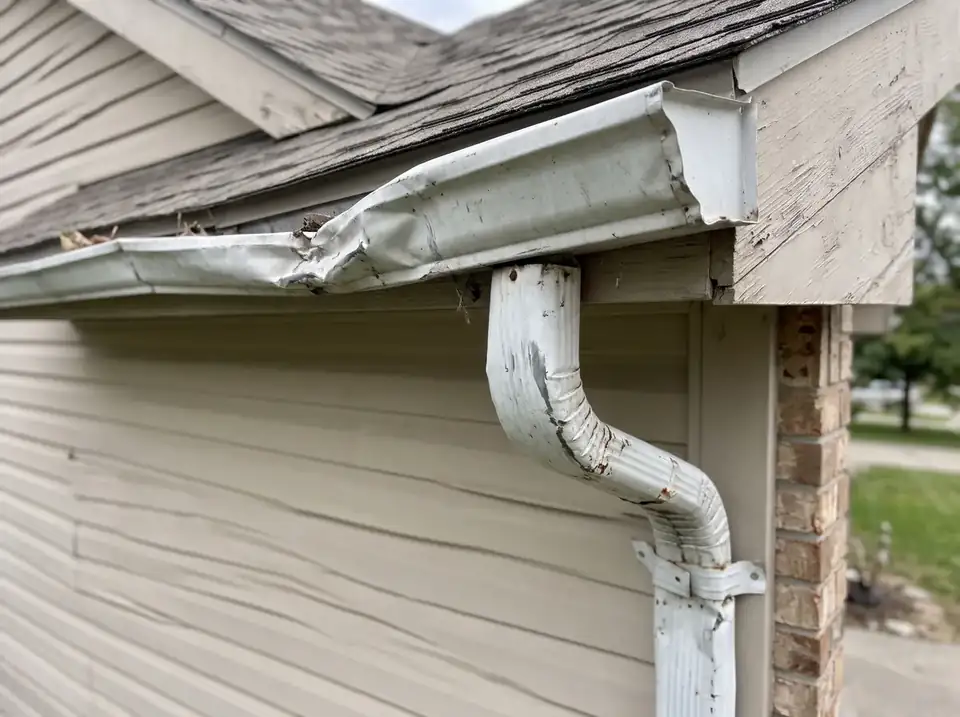
| Kinked and crushed runs | Falling limbs |
| Split downspouts | Water freezing inside |
| Stains on fascia and ceilings | Meltwater backing up behind the gutter |
Before winter
- Clean gutters after the leaf drop
- Tighten or replace loose hangers
- Check downspout straps
- Have dead limbs over the roof trimmed
- Make sure downspouts are clear to the ground
After the ice
- Wait for it to melt. Do not hack at ice.
- Look along each run from the ground.
- Check downspouts for splits.
- Photograph damage for your insurer.
- Have hangers and pitch checked.
Hanging gutters to hold
- Hidden hangers screwed into sound wood, at close spacing
- .032-inch aluminum
- Riveted, sealed corners
- Two or more straps per downspout
Why ice storms hit the Bluegrass
Ice storms happen when warm air rides over a shallow layer of freezing air at the ground. Rain falls through the warm layer, then freezes on contact with cold surfaces. Central Kentucky sits in a part of the country where that setup happens often enough to cause major storms every few years, as 2003 and 2009 showed.
What makes a gutter fail under ice
| Weak point | Why it fails |
|---|---|
| Spikes and ferrules | Pull out under weight |
| Wide hanger spacing | Gutter bends between hangers |
| Soft fascia | Screws lose their bite |
| Thin coil | Bends under load |
| Clogged trough | More ice forms inside |
| Limbs overhead | Fall onto the roof edge |
| ## Key points |
- The February 2003 storm brought close to an inch of ice to Lexington.
- January 2009 was the worst since 2003 across much of central and eastern Kentucky.
- Do not chip ice off gutters; let it melt.
- Hidden hangers at close spacing in sound wood hold best.