
The difference
Sectional gutters come in short lengths joined with connectors sealed with caulk.
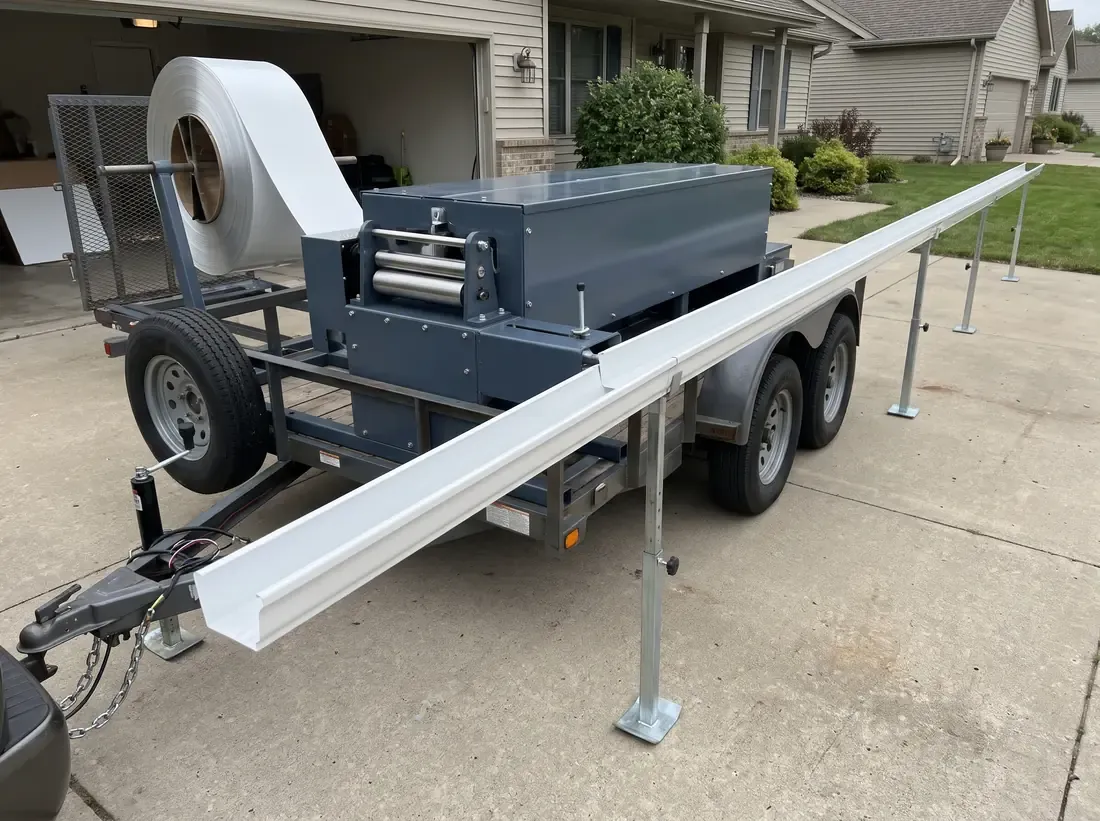
Seamless gutters are formed on site from a coil, one piece per run. The only joints are corners, end caps and outlets.
Comparison
| Seamless | Sectional | |
|---|---|---|
| Joints | Corners, end caps, outlets | Every few feet plus corners |
| Leak risk | Low | Higher with age |
| Look | Clean line | Visible seams |
| Installed by | Contractor | Often homeowner |
| Repair | Damaged runs replaced | Single sections swapped |
Why seamless suits Lexington
Freeze and thaw. Lexington averages 14.5 inches of snow a season and crosses freezing many times each winter. Water in a seam freezes, expands and cracks the sealant.
Ice storms. Ice storms such as 2003 load gutters heavily, and seams are weak points.
Wet years. In a year like 2018, with 71.98 inches, every dripping seam soaks the fascia below.
When sectional makes sense
- Small jobs such as a shed or a short porch run
- Half-round in materials not available seamless
- Matching an existing sectional system for a short repair
See seamless gutters.
Spotting which you have
From the ground, look along the gutter for joints every 10 feet or so. Those mark sectional gutters. Seamless gutters show joints only at corners and the ends of runs. Leaking sectional gutters usually drip at those regular joints, leaving a row of stains on the fascia or ground.
Converting
Moving from sectional to seamless is a full replacement, usually with new hangers and, often, some fascia repair. It is also the moment to fix size, downspout count and drainage.
Key points
- Seamless gutters have joints only at corners, end caps and outlets.
- Sectional gutters have a joint every few feet, and each can leak.
- Freeze and thaw is hard on joint sealant, which favors seamless here.
- Sectional still suits small jobs and some half-round.