
Lexington's urban forest
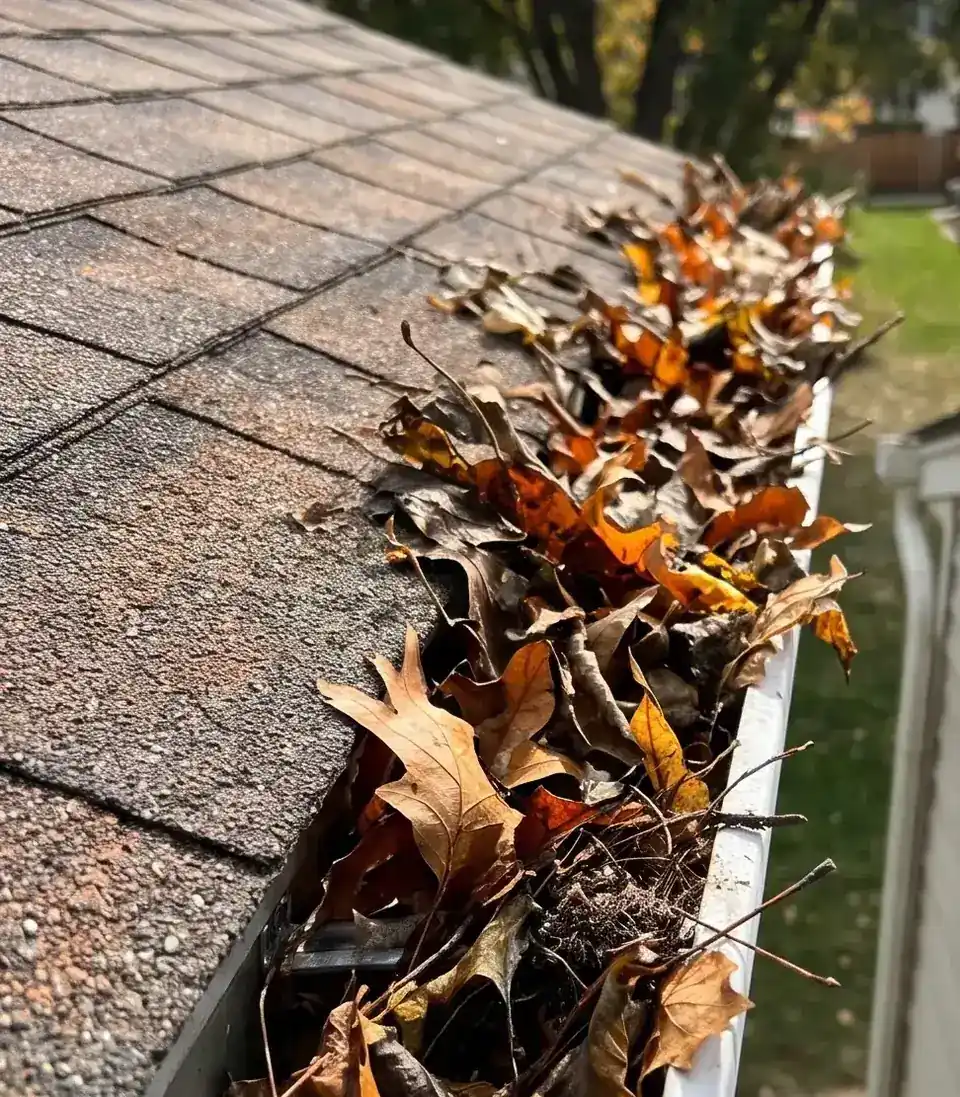
The city has an urban forestry program, and its 2022 tree canopy assessment measured tree cover across the Urban Service Area. Older neighborhoods sit under mature trees; newer subdivisions have younger trees that are now big enough to fill gutters.
The emerald ash borer
KET reports that Kentucky has more than 220 million ash trees and that the emerald ash borer, an invasive beetle from east Asia, was first discovered in the state in 2009. It kills ash trees. Dying trees:
- Drop twigs that jam outlets
- Shed dead branches that crush gutters
- Fail under ice, like the 2003 storm that coated twigs with more than 1.5 inches of ice
What trees drop into gutters
| Tree | What it drops | When |
|---|---|---|
| Maples | Seeds and leaves | Spring and fall |
| Oaks | Catkins, acorns, leaves | Spring and fall |
| Ash, dying | Twigs and branches | Any time |
| Pines | Needles | Year-round |
| Sweetgum | Spiky seed balls, leaves | Fall and winter |
What to do
- Have a tree service check dead or weak limbs over the roof.
- Clean gutters after the main drops, and more often under big trees.
- Fit stainless micro-mesh guards.
- Hang gutters on hidden hangers at close spacing, so a falling limb does less damage.
- Check gutters after every ice storm or windstorm.
See how often to clean gutters.
Signs an ash tree is in trouble
Extension services describe common signs of emerald ash borer damage, including thinning at the top of the crown, D-shaped exit holes in the bark, woodpecker damage and shoots sprouting from the trunk. If you see these on an ash over your roof, call a certified arborist.
Street trees
Before cutting a tree near the street, check whether it is a street tree under city oversight. Lexington's urban forestry program is the place to ask.
Ice and trees
Ice storms are where trees and gutters meet worst. The 2003 storm caused extensive tree damage around Lexington. Limbs that are already weak, like those on dying ash, are the first to break.
Key points
- The emerald ash borer was first found in Kentucky in 2009.
- Dying ash drop twigs and limbs that clog and crush gutters.
- Have dead limbs over the roof checked before winter.
- Micro-mesh guards and close hanger spacing help under trees.