
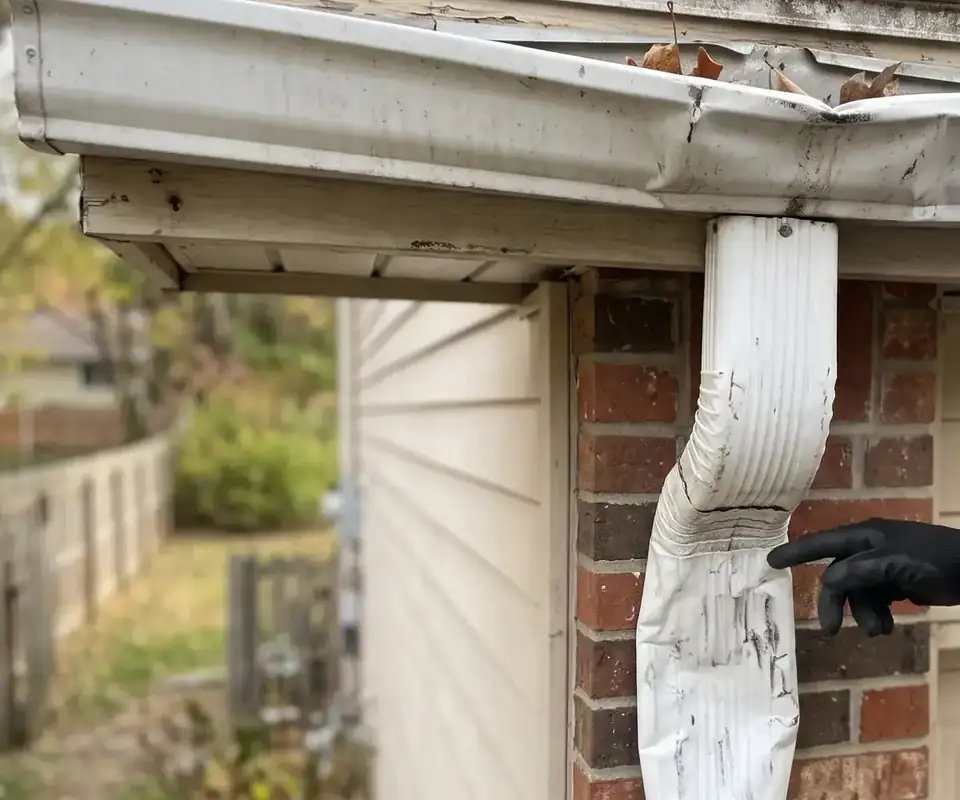
Common downspout problems
| Problem | Sign | Fix |
|---|---|---|
| Clogged elbows | Overflow at the top in a storm | Flush or take apart |
| Crushed or split section | Water spraying partway down | Replace the section |
| Loose straps | Downspout swings or leans | Re-strap into solid wood or anchors |
| Missing extension | Water at the base of the wall | Add an extension or splash block |
| Buried pipe backing up | Water at the downspout base | Test, clear or bring above ground |
| Frozen solid | Ice in the downspout in winter | Clear when thawed; check pitch above |
Why the outlet end matters here
Fayette County sits on limestone that water dissolves along its cracks. Water dumped at the base of a wall follows the foundation down. The Kentucky Geological Survey notes that soils over solution channels can settle and wash out. Carry downspout water well away, and keep it away from any sinkhole or low spot near the house.
Strapping for ice and wind
Ice inside a downspout adds weight, and wind catches tall drops. Two straps minimum, more on two-story houses.
See downspouts and drainage in Lexington.
Clearing a clogged downspout
Most clogs are in the top elbow or the bottom elbow. A contractor will usually:
- Clear the outlet at the top from the gutter.
- Flush from the top with a hose.
- If it will not clear, take the elbows apart.
- Check for crushed or kinked sections.
- Reassemble with screws, not just crimping.
Downspouts in winter
Water in a downspout can freeze solid in a cold snap. Ice inside can split seams and add weight. After the thaw, check for splits and loose straps.
In short
Clogged elbows, crushed sections, loose straps and missing extensions are the usual downspout problems, and all are quick fixes that protect the foundation.